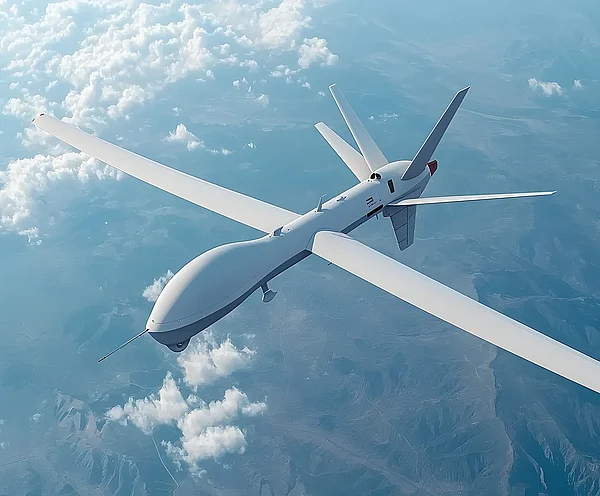
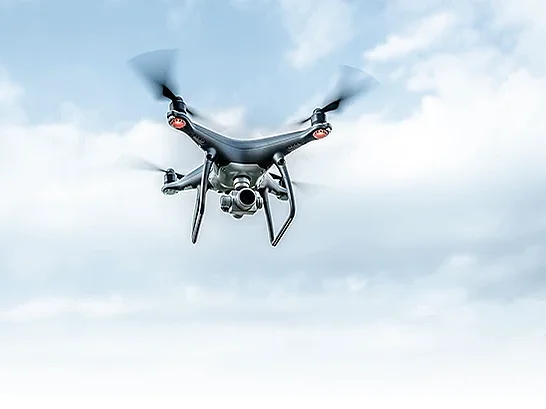
Airframes
Lightweight structures optimized for strength and stiffness.

UAVs & Drones
Lightweight Composite Solutions

RAMPF supports UAV and drone manufacturers with advanced composite solutions for structural and functional components. From airframes and payload structures to housings and enclosures, we help customers improve performance, reduce weight, and optimize production.
Combining engineering, tooling, manufacturing, finishing, testing, and assembly under one roof, RAMPF delivers production-ready solutions from concept through series production.
UAV composite materials are lightweight, high-performance materials such as carbon fiber, fiberglass, and hybrid composites used in drone structures and components.
Compared with traditional materials like metal or plastic, composites offer excellent strength-to-weight performance, design flexibility, and durability, helping manufacturers improve range, payload capacity, structural integrity, and overall flight performance.
RAMPF develops and manufactures carbon fiber and fiberglass composite components tailored to the structural, functional, and production requirements of modern UAV platforms.
Strong, lightweight composite structures for demanding UAV applications where maximizing strength-to-weight performance is critical.
Durable and cost-effective solutions for housings, covers, enclosures, and other drone components.
Material systems optimized for weight, cost, geometry, and performance requirements.
Metallization and finishing solutions supporting EMI shielding and additional functional requirements.
In-house tooling capabilities accelerate development and improve part quality and consistency.
Integrated assemblies, hardware installation, wiring harnesses, and customized kits to simplify final system integration.
Resin infusion and VARTM enable lightweight, high-quality composite parts without autoclave processing. These technologies are ideal for UAV airframes, housings, fairings, and payload structures.
TFP places reinforcement precisely where it is needed, optimizing strength while minimizing unnecessary material.
A proven manufacturing method for complex geometries, specialized components, and low-volume production.
In-house tooling supports mold accuracy, shorter lead times, and consistent part quality.
Surface treatments and metallization solutions support durability, EMI shielding, and functional performance.
RAMPF operates under ISO 9001:2015 and AS9100 Rev D standards, supporting reliable and repeatable production.
UAV programs require components that are lightweight, durable, aerodynamic, manufacturable, and cost-effective.
RAMPF supports customers throughout the product lifecycle with:
This expertise helps manufacturers optimize materials, performance, manufacturability, and cost from development through production.
RAMPF provides end-to-end composite development and manufacturing from engineering through assembly, enabling UAV manufacturers simplify development and accelerate production.
By consolidating these capabilities within a single partner, UAV manufacturers can simplify development, reduce complexity, and accelerate the path from prototype to production.
Drawing on extensive experience across aerospace, defense, industrial, medical, and consumer applications, RAMPF delivers reliable, production-ready UAV composite solutions designed for demanding environments.
From airframes and payload structures to functional enclosures and integrated assemblies, RAMPF delivers production-ready UAV composite solutions tailored to demanding applications.
Contact our team to discuss your project requirements and discover how advanced composite technologies can support your next UAV program.
Global Support. Anytime. Anywhere.
UAV composite materials are lightweight, high-strength materials used to manufacture drone structures and components. Common examples include carbon fiber composites, fiberglass composites, and hybrid composite materials. They are used in airframes, housings, covers, payload structures, enclosures, fairings, and other UAV parts.
Composites are used in UAVs and drones because they reduce weight while maintaining strength and stiffness. This can help improve flight performance, range, payload capacity, durability, and design flexibility.
Carbon fiber drones offer higher strength and stiffness than many plastic drone structures, depending on the design, material system, and manufacturing process. The right choice depends on the aircraft’s load requirements, budget, production volume, and operating conditions.
Common UAV composite parts include airframes, covers, housings, payload structures, enclosures, access panels, fairings, and structural assemblies. Composite materials also support complex shapes and multifunctional requirements, such as EMI-shielded enclosures.
Yes, RAMPF offers composite engineering, tooling, prototyping, manufacturing, metallization, finishing, testing, and subassembly capabilities that can support both development and production requirements.
RAMPF’s composite manufacturing capabilities include VARTM, resin infusion, tailored fiber placement, hand layup, precision tooling, metallization, testing, finishing, and subassembly.