
Adhesive and Sealant
Robust, long-lasting bonds

Bonding and sealing in one material: Our adhesives and sealants create durable bonds between a wide range of materials while reducing costs through automated processing.
Adhesive bonding is a key technology of the 21st century: efficient, flexible, and reliable. Whether in automotive, furniture, electronics, or construction-related industries, our systems deliver high strength, temperature resistance, and chemical resistance, along with excellent adhesion to a wide variety of substrates.
If your application is focused solely on bonding components, you can find the right material in our adhesive systems portfolio.
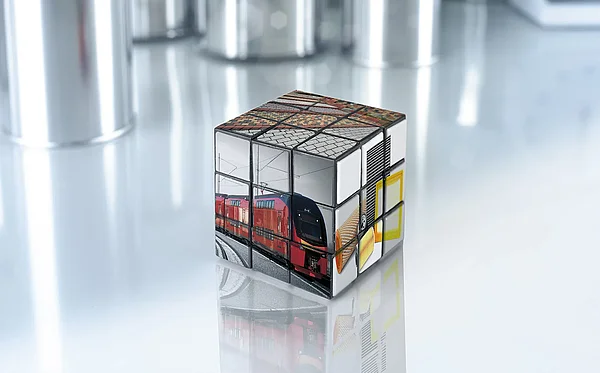
Properties of Our Adhesive and Sealant
- High strength and adhesion: Secure bonding of substrates such as wood, plastics, metal, glass, and more
- Temperature and chemical resistance: Reliable performance even under extreme conditions
- Flexible processing: Compatible with manual and automated applications
- Broad portfolio: One-component and two-component polyurethane, epoxy, and silicone systems; one-component and two-component silane-modified polymers (SMP) for special requirements
Bonding and Sealing in a Single Process
Adhesives and sealants perform two functions in a single material: They create durable bonds between components while sealing the joint against moisture and other substances. By combining both functions in one material, a single application replaces the separate application of an adhesive and a sealant, saving both time and costs by reducing the number of processing steps.
Elastic systems based on silicone and silane-modified polymers accommodate movement between components while maintaining a reliable seal. If the sole requirement is sealing, for example in housings and enclosures, our foam gaskets are the ideal solution.
Your Key Benefits
Applications
Our adhesives and sealants are used wherever wood, plastics, metal, glass, composites, or mineral-based materials need to be securely bonded and sealed. Typical applications include mechanical and metal engineering, building technology, automotive and transportation, household appliances, marine, construction, and HVAC systems. For an overview by application area, see Sealant Systems by Industry.


Material Types
Low to high viscosity
Good adhesion to metal/wood and plastic
Universally applicable over medium to large areas
Rapid complete curing for short process times
Workhorse with a wide adhesive spectrum
Temperature resistance from -40 to +100 °C
Low shrinkage
High abrasion resistance
Soft elastic to very hard systems
High mechanical and chemical resistance
Certified to VDI 6022
Learn more!
Exposure time from a few minutes to several hours
Highly flexible elastic bonding and sealing (elongation at break for 2C systems: approx. 300%; 1K > 300%)
Extremely water-repellent
Universal adhesion, also to metals
Excellent chemical resistance
Outstanding temperature resistance from -60 to over +200 °C
High UV stability
Optimum physical properties, virtually constant over the entire application temperature range
Learn more!
Short to long pot life, from 5 to 110 min
Exposure time of 5 to 150 min
Good adhesion to aluminum and other metals
High temperature resistance from -55 to +180 °C
Excellent chemical resistance
Cures at room temperature
Systems with rapid curing for short process times
Learn more!
Custom silane-modified polymers (SMP) from RAMPF deliver outstanding performance and quality for demanding bonding and sealing applications in machinery and metalworking, building technology, automotive and transportation, home appliances, marine, and construction.
For more information on the handling of diisocyanates under REACH, Annex XVII, Entry 74, please refer to the following document:
Global Support. Anytime. Anywhere.
FAQ
Bonding and sealing combines two functions in a single material. It permanently joins components while simultaneously sealing the joint against moisture and media. Elastic systems based on silicone and polyurethane as well as silane-modified polymers are particularly well suited for this purpose.
The processing of adhesives and sealants typically involves several key steps: surface preparation, precise mixing of the adhesive (for 2C systems), accurate material application, assembly of the components, and subsequent curing. These steps ensure a strong, durable, and long-lasting bond.
Our industrial adhesives provide reliable adhesion to a wide range of substrates, including wood, plastics, metals, glass, composites, and mineral-based materials. This versatility makes them suitable for a broad spectrum of industrial bonding and sealing applications.
Polyurethane (PU) systems offer a high degree of flexibility, ranging from soft-elastic to hard-elastic formulations; they provide good adhesion to plastics when the substrate has been appropriately pretreated. Epoxy systems deliver high mechanical strength as well as excellent chemical and thermal resistance. Silicone systems are characterized by their outstanding elasticity and temperature resistance. Silane-Modified Polymers (SMPs) combine many of the advantages of silicones and polyurethanes, offering strong adhesion, long-lasting flexibility, and reliable durability.
Yes. Our adhesives and sealants can be applied either manually or by machine, depending on the requirements of your production process. For automated dispensing and application, we can draw on the expertise of our dispensing systems specialists to develop a solution tailored to your manufacturing environment. This ensures precise material application, consistent quality, and efficient processing.