
Automotive Sealing Systems
FIPG Foam Gaskets for Vehicle Components

Formed-in-place foam gaskets engineered for modern vehicle production — low emissions, fast cure, automated dispensing.
The Engineering Problem
Automotive components such as door modules, lighting assemblies, loudspeaker housings, and interior trim, require seals that hold consistently over the full service life of the vehicle. That means resistance to moisture ingress, dust contamination, and chemical exposure, while also meeting increasingly strict cabin emissions targets and NVH performance requirements. At the same time, production line throughput demands materials that cure fast enough to stay within cycle time budgets.
How RAMPF Solves It
RAMPF sealing systems use FIPG (formed-in-place foam gasket) technology to apply liquid polyurethane or silicone directly onto the component, where it expands and cures into a precisely shaped foam gasket. The result is a continuous, gap-free seal with no manual handling, no pre-cut gaskets, and no assembly tolerances to manage. RAMPF Speed Technology accelerates the cure reaction, making parts ready for further processing in significantly less time than conventional systems.
Key Technical Specifications
| Property | Typical Performance |
| Material Chemistry | Polyurethane (RAKU® PUR), Silicone (RAKU® SIL) |
| Processing Method | FIPFG / FIPG — dispensed directly onto the component |
| Compression Set (DVR) | < 5% — excellent long-term recovery |
| Shore Hardness | Flexible; formulated to application-specific load requirements |
| Emission Testing | Compliant with VDA 270, VDA 275, VDA 278 |
| Fire Protection | Meets automotive fire protection standards |
| Cycle Time Improvement | Up to 30% shorter vs. standard curing systems (RAMPF Speed) |
| Adhesion | Broad material compatibility — no primer required in most cases |
| Certifications | ISO 9001, ISO 14001, IATF 16949 |
| OEM/Tier-1 Approvals | Yes — established supply base with leading manufacturers |
Applications


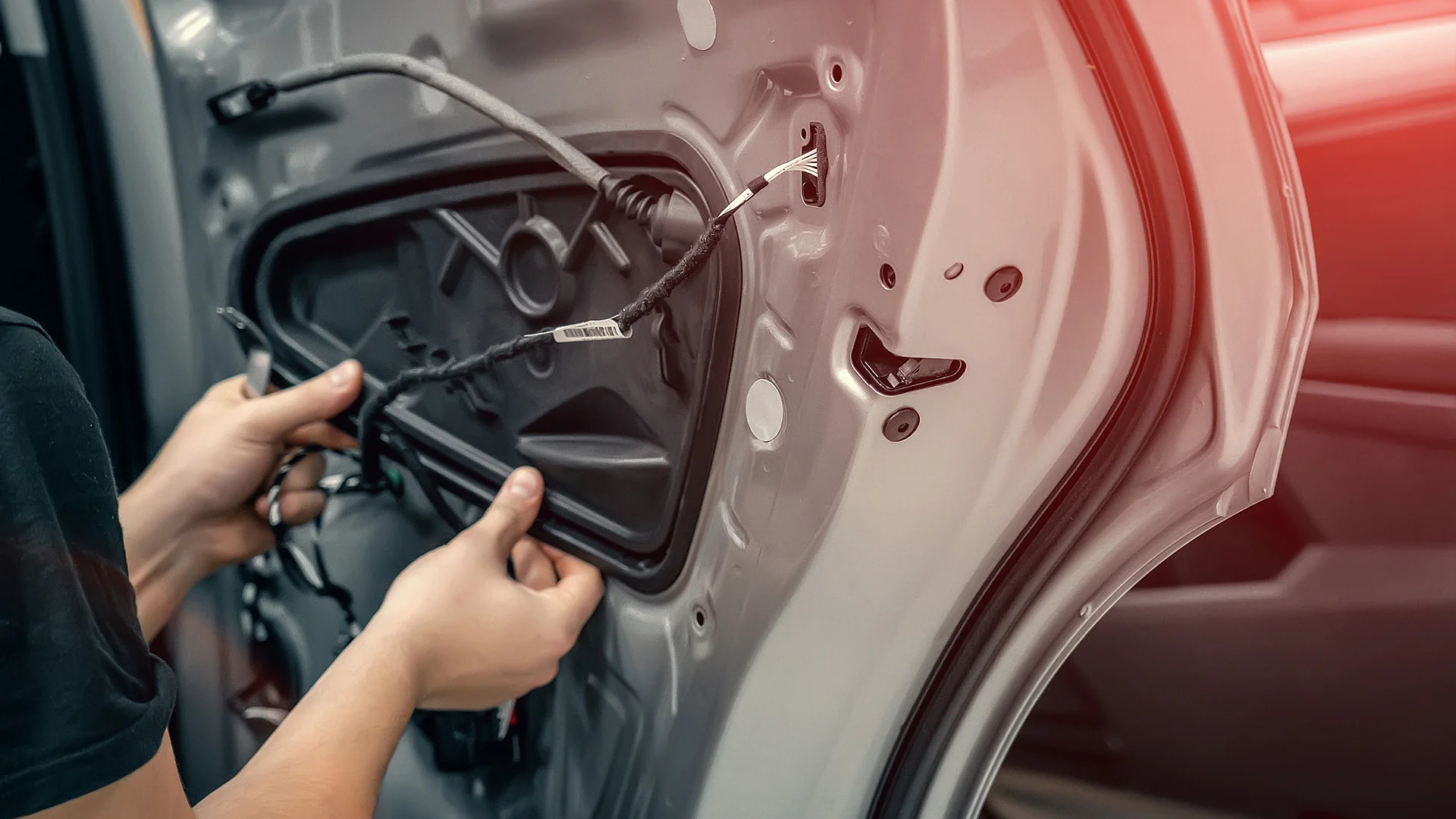


Polyurethane sealing foams are applied directly to the door module carrier in a fully automated dispensing process. The foam compensates for component tolerances, provides reliable moisture and dust exclusion, and contributes to NVH performance by damping vibration transmission through the door assembly. Low Shore hardness formulations enable low installation forces during vehicle assembly.
For any application inside the cabin, RAMPF offers specially developed low-emission polyurethane systems that comply with VDA 270, VDA 275, and VDA 278. These systems are developed and tested to meet OEM interior air quality requirements.
Two-component PU foam gaskets deliver long-lasting protection against moisture and dust ingress in headlight and taillight assemblies, critical for both function and compliance with IP protection class requirements. The FIPG process ensures a continuous seal with no gaps at corners or transitions.
RAMPF sealing systems are approved by leading automotive OEMs for use in acoustic components. The foam gasket acoustically isolates the speaker while providing structural sealing at the housing interface.
Polyurethane and silicone systems from RAMPF are used across a broad range of sealing applications where chemical resistance, thermal stability, and long-term compression recovery are required.
Talk to Our Experts Now!
Thanks to our innovative FIPFG technology, we tailor our products precisely to your requirements. Whether you need high‑volume series production or small batches for specialized applications — we deliver the perfect customized solution for you.
Global Support. Anytime. Anywhere.
FAQ
RAKU® PUR is a polyurethane-based sealing foam, optimized for high production throughput, excellent DVR values, and low-emission formulations suited to interior applications. RAKU® SIL is a silicone-based system, preferred where broader temperature resistance or specific chemical compatibility is required. Both product lines are processed using FIPFG technology.
DVR (compression set, or Druckverformungsrest in German) measures how much permanent deformation a foam seal retains after sustained compression. A DVR below 5% means the gasket recovers nearly all its original thickness after compression, which directly translates to a seal that maintains clamping force and leak-tightness over the service life of the vehicle, including thermal cycling and aging.
RAMPF Speed Technology refers to fast-reacting polyurethane formulations that significantly reduce the time between gasket dispensing and the part being ready for further handling. Compared to standard curing systems, RAMPF Speed enables up to 30% shorter cycle times, which is critical in high-volume automotive production environments.
Yes. RAMPF’s Dispensing Technology business unit manufactures the CNC dispensing systems used to apply FIPFG sealing compounds. This means RAMPF can supply both the material and the processing equipment, and support integration into existing production lines.
RAMPF’s sealing systems operations are certified to ISO 9001 (quality management), ISO 14001 (environmental management), and IATF 16949 (automotive quality management system). Products are tested and approved by leading OEMs and Tier-1 suppliers.
For EV and electromobility sealing integration, look for partners experienced in battery housing sealing, power electronics encapsulation, and thermal interface materials. RAMPF Group is active across all three areas, supplying FIPFG sealing systems, thermally conductive potting resins, and dispensing equipment tailored to EV assembly line requirements.