
Composite Materials for Lightweight Structures
Innovative Solutions in Carbon and Glass Fiber

High-Performance Composite Materials for Aerospace, Defense & Beyond
RAMPF delivers composite materials that combine carbon fiber and fiberglass reinforcement with engineered resin systems, designed for structural and non-structural applications in aerospace, defense, and beyond. From fairings and engine cowls to complex aircraft-camera interfaces and spars, every part is built around the strength, weight, and environmental limits it has to meet.
Material selection, composites engineering, tooling, and manufacturing come from one source. Fiber architecture and resin system are therefore matched to the actual load case instead of being picked from a catalog, in low-volume prototypes as well as in full-scale production to MIL-SPEC and aerospace standards.
What Are Composite Materials?
A composite material combines a reinforcement fiber that carries the load with a polymer matrix that holds the fibers in position, transfers stress between them, and protects them against moisture, chemicals, and UV exposure. Neither component performs on its own. Together they are stiffer and stronger for their weight than steel or aluminum, and they do not corrode.
The decisive advantage is that the properties are engineered rather than given. Fiber type, fiber orientation, and layer count are defined per part, so stiffness sits exactly where the load runs and is left out where it would only add weight. That is why composite materials are specified for an application instead of being ordered from a standard range. Further background is available in our glossary entry on fiber-reinforced materials.
Materials We Work With
Two reinforcement systems cover our part spectrum. Which one fits follows from the load case, the weight target, and the environment the part has to survive.
Carbon Fiber Composites (CFRP)
Carbon fiber offers the highest stiffness-to-weight ratio of the common reinforcements and reduces mass by up to 40 percent compared with an aluminum part of the same function. We use CFRP for aircraft structures, UAV airframes, simulator components, and for every part where weight is a design constraint rather than a wish.
Fiberglass Composites (GFRP)
Fiberglass reinforcement is more impact tolerant and more cost efficient than carbon fiber, and it lets radio waves pass. That makes GFRP the material for fairings, engine cowls, and radomes, and for large non-structural parts where weather resistance and cost matter more than maximum stiffness.
Your Key Benefits
Advanced Composite Material Capabilities
From carbon fiber structures for aerospace and defense to fiberglass parts for fairings and radomes, the following capabilities show where our composite materials are used and how they are engineered.
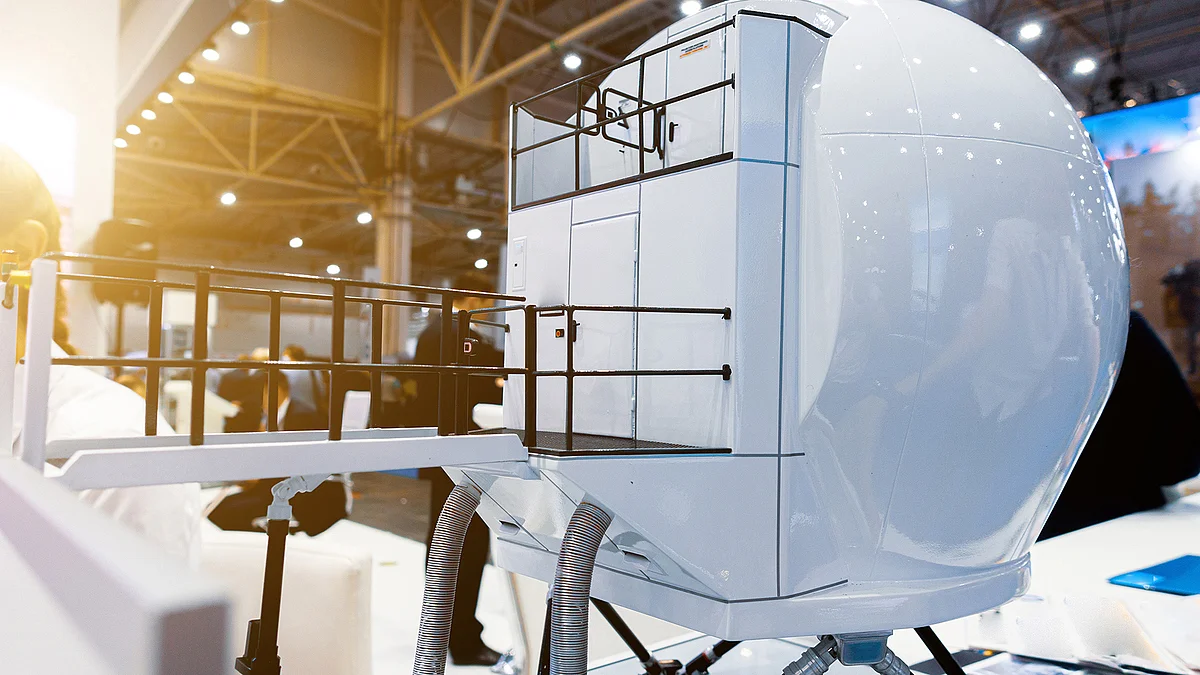
Utilizing high-performance composite materials, RAMPF manufactures lightweight, impact-resistant components for aircraft structures, UAVs, and military applications.
Engineered for fairings, engine cowls, and radomes, these material solutions offer superior weather resistance, strength, and cost efficiency.
Precision material science ensures structural stability, vibration dampening, and mechanical optimization for critical aerospace and defense applications.
Designed for automotive, rail, and urban air mobility applications, these composite materials provide lightweight strength, corrosion resistance, and aerodynamic efficiency.
Industry-leading material solutions developed to meet MIL-SPEC, aerospace, and transportation standards, ensuring compliance and performance excellence.
Choosing the Right Material for Your Part
The material follows from the application, not from a data sheet ranking. Four questions usually decide the selection.
- Load case and stiffness: Where deflection limits the design, carbon fiber is the answer. Where impact and damage tolerance dominate, glass fiber performs better.
- Weight budget: The tighter the weight target, the stronger the case for a carbon fiber layup with fibers placed along the load path.
- Environment: Operating temperature, media contact, and UV exposure determine the resin system. Fiber and matrix are always selected together, never in isolation.
- Electromagnetic requirements: Antennas, radomes, and sensor covers need a radio-transparent laminate. Shielded enclosures need the opposite.
Where requirements conflict, the layup is adjusted rather than the requirement. That is the difference between a standard laminate and a composite material engineered for your part.
From Material to Finished Part
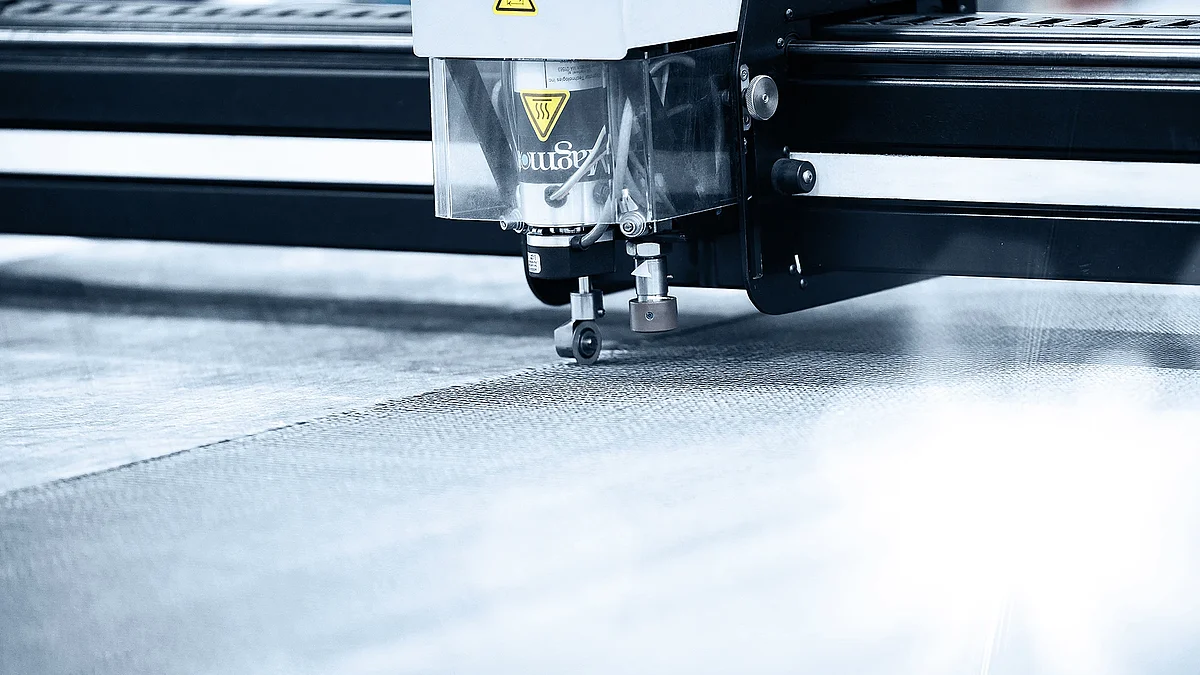
The material only performs as well as the process that shapes it. Our production combines tailored fiber placement, resin infusion, and vacuum-assisted resin transfer molding, so the fibers run along the load path and the laminate cures free of voids. Resin infusion can significantly reduce tooling costs compared to prepreg and autoclave processing, as curing can be carried out at lower temperatures and pressures.
The entire process surrounding the laminate is covered, from tooling materials and mold making to machining, metallization for EMI shielding, and assembly as a value-added service. Which process fits your part is described on our page for composites manufacturing, and the applicable inspection and documentation requirements are covered under quality.



Transforming Industries with High-Performance Composite Materials
RAMPF is redefining material solutions through cutting-edge engineering and next-generation composite materials. From aerospace-grade carbon fiber structures for aerospace and defense to advanced composites in the transportation market, every solution is tailored to maximize efficiency, durability, and performance.
Explore the future of composite material solutions today.
Global Support. Anytime. Anywhere.
FAQ
A composite material combines a reinforcement fiber with a polymer matrix. The fiber carries the load, the matrix holds the fibers in position and protects them. The combination is stiffer and stronger for its weight than steel or aluminum and does not corrode.
Industrial composites are made of reinforcement fibers and a resin matrix. RAMPF works with carbon fiber for maximum stiffness at minimum weight and with glass fiber where impact tolerance, weather resistance, and cost are decisive.
Carbon fiber is stiffer and lighter and shields electromagnetic interference. Fiberglass is more impact tolerant, more cost efficient, and transparent to radio waves. Carbon fiber is therefore used for weight-critical structures, fiberglass for fairings, cowls, and radomes.
At RAMPF, parts are produced using tailored fi ber placement, resin infusion, and vacuum-assisted resin transfer molding. The fibers are placed along the load path, the resin is drawn through the laminate under vacuum, and the part cures in a dedicated mold.