
Polyurethane Resin and Epoxy Systems for Structural Casting
For Filter Casting, Edge Casting, Wet Cast, Grinding Media, and Polishing Media

Rely on structural casting resins engineered for your production process, from manual operations to fully automated manufacturing. Our reactive one-component and two-component systems based on polyurethane resin (RAKU® PUR) and epoxy (RAKU® POX) are developed for wet cast, filter casting, edge casting, and grinding and polishing media.
What Is Polyurethane Resin?
Polyurethane resin is formed when a polyol (component A) reacts with an isocyanate (component B). Depending on the raw materials and additives selected, the result can be a foam, a soft and elastic material, or a hard solid. For casting materials, raw materials are added to achieve a harder texture than in foams. Under the RAKU® PUR brand, RAMPF offers a wide range of two-component polyurethane systems, including casting and bonding systems. Learn more about the chemistry in our glossary entry on polyurethane.

Properties and Functions
- Bonding and Casting: Strong, long‑lasting bonds for metal, plastics, aluminum, and wood.
- Protection and Resistance: High resistance to moisture, chemicals, vibration, UV exposure, extreme temperatures, and fire.
- High Performance: Outstanding mechanical strength, dimensional stability, strong adhesion, and superior surface quality.
- Efficient Processing: Short curing times, flexible use in series production and prototyping, low density.
- Special Solutions: Antibacterial, electrically conductive (ATEX), FDA‑compliant, sustainable, and lightweight formulations.
Your Key Benefits
Applications
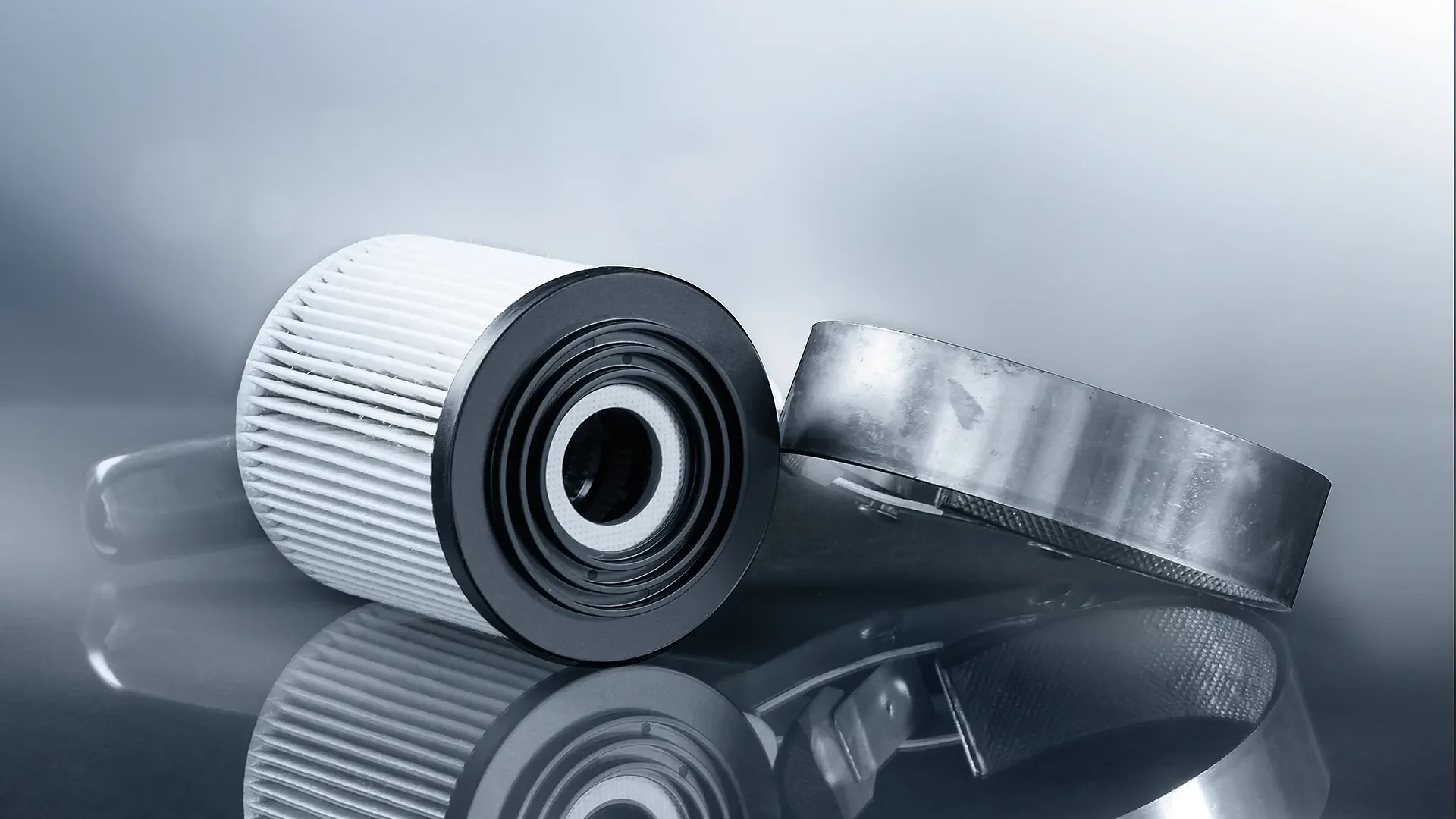
Our structural casting resins cover filter and gasket applications as well as edge casting, wet cast forms, and grinding and polishing media. For embedding electronic assemblies, we offer dedicated potting compounds based on epoxy, polyurethane, and silicone. Foam gaskets for air-filter housings and ventilation modules are covered on our page on HVAC and filter sealing systems.


Services at a glance
- Application Consulting: Requirements specification, material selection, process design
- Process Integration: Compatible with our mixing and dispensing systems – from manual units to full automation
- Custom Formulation: Adjustable hardness, viscosity, and pot life
- Highly Qualified Support: Expertise in both material and process engineering
Talk to Our Experts Now!
Achieve superior surfaces, longer tool life, and maximum process reliability – with RAMPF Structural Casting Resin.
Global Support. Anytime. Anywhere.
FAQ
Our structural casting resins are used for filter casting, edge casting of doors, school desks, laboratory furniture, and desks in trains, wet cast forms, and grinding and polishing media. Beyond structural casting, polyurethane as a material is used in many industries, including automotive, electronics, furniture, packaging, household appliances, and energy technology.
Both are reactive resins that are usually mixed from two components and cure into a solid. Polyurethane resin can be formulated from soft and elastic to hard, adheres very well to plastics, and its reactivity can be set flexibly, including systems that cure at room temperature. Epoxy resin is a thermoset that is very strong and chemically stable. Our application consulting helps you select the right material for your requirements.
Yes. We formulate hardness, viscosity, and pot life to match your application, whether you process the resin manually or on automated mixing and dispensing systems.
Yes. Alongside systems that we tailor to your requirements, our portfolio includes filter casting systems with FDA-compliant formulations.
Yes, as long as it is applied properly and suitable personal protective equipment such as safety goggles and gloves is used. In all measurements of the MDI content at RAMPF, the result was below the maximum allowable concentration (MAC), in some cases up to 100 times lower.
No. RAMPF supplies its structural casting resins exclusively to industrial users and business customers and supports them from concept development to series production. RAMPF does not currently sell to private individuals or the consumer market.